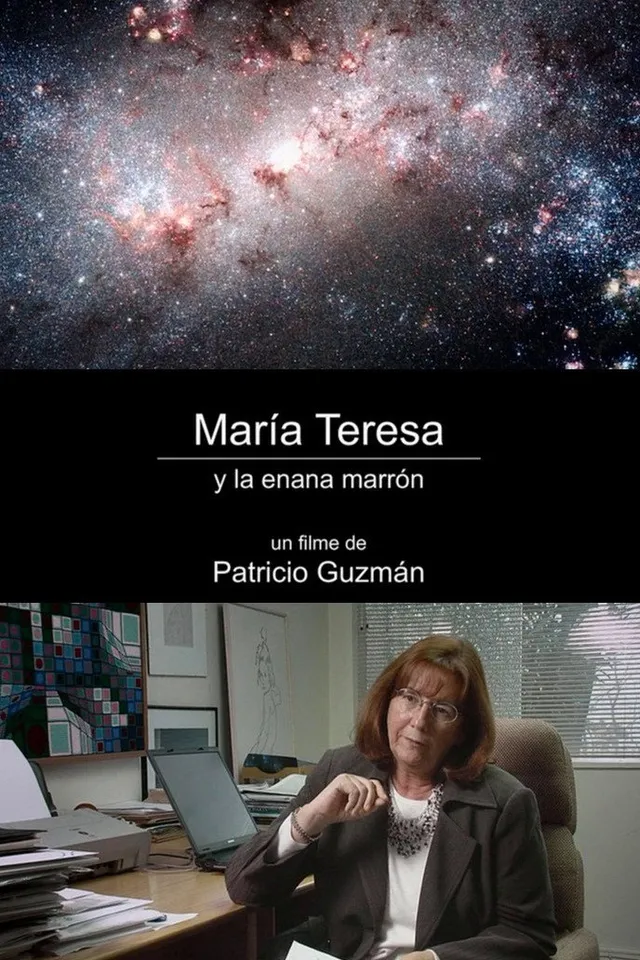
María Teresa y la enana marrón (María Teresa and the Brown Dwarf, 2010) is a short documentary by Patricio Guzmán about the Chilean astronomer María Teresa Ruiz, winner of the National Prize for Exact Sciences in 1997 and discoverer of a brown dwarf. Guzmán links her scientific work to two pastimes: she weaves wool tapestries and searches for agates on the beaches. He made it with footage that did not make it into Nostalgia for the Light, and it runs 12 minutes.
About the film
Brown dwarfs are stellar objects with no light of their own. María Teresa Ruiz discovered one of them, Kelu-1, at the La Silla observatory, and the find made her known in astronomical circles around the world. She was also the first woman to receive Chile’s National Prize for Exact Sciences.
According to Guzmán, a discovery like that demands extraordinary patience, and that patience comes from her two pastimes. Ruiz weaves tapestries from wool yarn and walks the beaches looking for agates, the small luminous crystals the Pacific Ocean washes up.
The short listens to her talk about all three at once, astronomy, tapestries and agates, and tries to answer one question: how the great passions of her life are connected.
Making of
It is one of four astronomy shorts that Guzmán edited from material left out of Nostalgia for the Light, with the same crew: cinematography by Katell Djian, sound by Freddy González, music by José Miguel Miranda and José Miguel Tobar, and editing by Emmanuelle Joly and Guzmán himself. It was produced by Renate Sachse and Verónica Rosselot.
Reception
It premiered at the 2010 FIDOCS. On April 24, 2020, Market Chile showed it online in its series of Guzmán shorts, and in 2022 it was part of the focus the Cinélatino festival in Toulouse devoted to the director.
Sources
- CineChile
- Universidad de Chile
- Patricio Guzmán, synopsis and credits, official website (2016 archive)
- “Ciclo de cine online con 9 películas de Patricio Guzmán,” El Mostrador, April 10, 2020
- “Fue un regalo del universo,” ADN Radio, October 27, 2026