Chilean documentary filmmaker
Patricio Guzmán
1941–2026
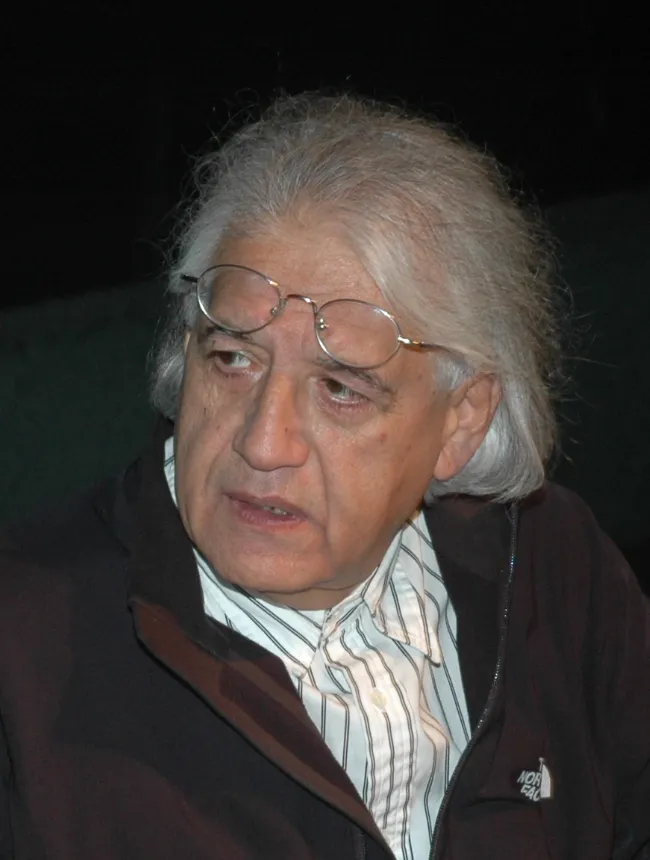
Patricio Guzmán (Santiago, Chile, August 11, 1941 – Paris, September 15, 2026) was a Chilean documentary filmmaker. He filmed the last months of Salvador Allende’s government in The Battle of Chile, one of the major works of documentary cinema, and devoted the rest of his life to his country’s memory, up to the trilogy that began with Nostalgia for the Light (2010).
For Memoria Chilena, the portal of Chile’s National Library, he was, along with Raúl Ruiz and Alejandro Jodorowsky, one of the most internationally acclaimed Chilean filmmakers. From November 1973 he lived outside Chile, mostly in Paris, yet almost all his films return to the country: to the coup, to the disappeared, to the Atacama Desert, to the Andes. In 1997 he founded the Santiago International Documentary Film Festival (FIDOCS), and in 2023 he received Chile’s National Prize for Performing and Audiovisual Arts. He died in Paris at 85, while working on a new film.
Childhood and education
1941–1969Patricio Guzmán Lozanes was born in Santiago on August 11, 1941. He went to schools in Viña del Mar and Santiago and finished high school at the Instituto Nacional. Between 1960 and 1965 he attended the University of Chile — theater courses, a year of history, then philosophy — without completing a degree. At the time he was also writing: he published two short stories and a novella before turning to film.
From 1963 he trained at the Film Institute of the Catholic University under the priest and filmmaker Rafael C. Sánchez, whose assistant he became. In 1966 he went to Madrid to study at the Official School of Cinematography. There he made six short fiction films, two of them written with the Chilean playwright Jorge Díaz: Apuntes sobre la tortura y otras formas de diálogo (1968) and El paraíso ortopédico (1969). In 1970 he graduated as a director.
First short films
1965–1966He made his first films at the Film Institute. Viva la libertad (1965) is an animation of some 650 drawings about a prisoner who escapes from jail and discovers that the city confines him too. Electro Show (1966), a fake newscast assembled as a collage of newspapers, advertising and television, won the award for best 16mm fantasy film at the Viña del Mar festival. Mimbre y greda (1966), by contrast, was a commission: an educational short about wicker and pottery artisans for the series Andanzas de un chileno.
These were school projects, made with few resources, but they already show two constants of his cinema: faith in editing and a critical eye on Chilean society.
Popular Unity and The Battle of Chile
1970–1973Guzmán returned to Chile in late 1970, just as Salvador Allende had taken office, and decided to film what was happening. The First Year (1972) covers the first twelve months of the Popular Unity government; the French filmmaker Chris Marker brought it to theaters in France.
In October 1972, during the employers’ strike against the government, he set aside a fiction film he was preparing for Chile Films and went out to film the workers who kept the factories running. That was the origin of La respuesta de octubre, the first film he made with the cameraman Jorge Müller; years later he took its negative apart to use it in The Battle of Chile.
For his next project he put together a small, independent crew: Jorge Müller on camera, Federico Elton, Bernardo Menz and José Bartolomé. With film stock sent by Chris Marker, they filmed the last months of Allende’s government day by day, until September 11, 1973.
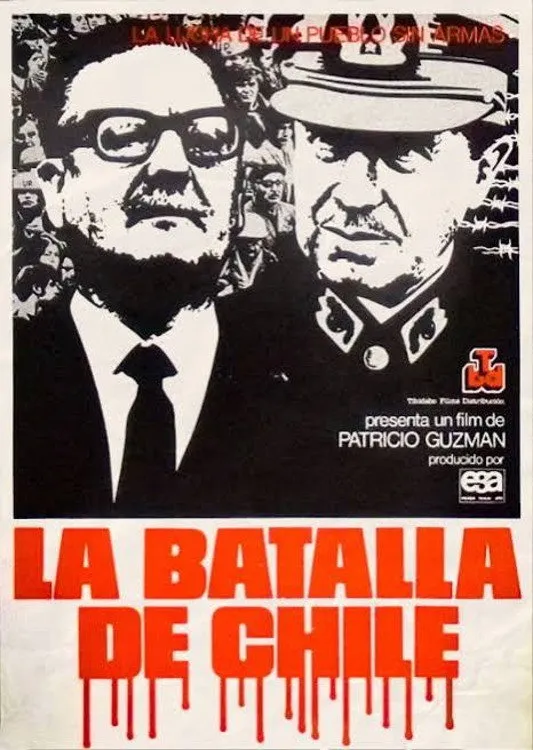
The Battle of Chile
1975–1979 · 272 min · Chile, Cuba, France
A documentary in three parts about the last year of Salvador Allende’s government: The Insurrection of the Bourgeoisie (1975), The Coup d’État (1976) and Popular Power (1979). Filmed in Chile in 1972 and 1973 and edited in Cuba with Pedro Chaskel, it is considered one of the greatest documentaries in the history of cinema.
Spanish-language poster for The Battle of Chile.
The coup, the National Stadium and exile
1973–1979After the coup, Guzmán was held in the National Stadium, where he spent nearly two weeks and was threatened with execution. In November 1973 he left Chile and managed to get the footage out of the country. Jorge Müller was not so lucky: he was arrested in November 1974 and remains disappeared.
The Battle of Chile was edited in Cuba, with the support of the Cuban Institute of Cinematographic Art and Industry (ICAIC) and the editor Pedro Chaskel. The first two parts were presented at the Directors’ Fortnight in Cannes in 1975 and 1976; the third was completed in Havana in 1979.
Spain and France
1980–2004From 1980 he lived between Spain and France, and for decades he lived in Paris as a political refugee. In 1983 he directed The Compass Rose, the only fiction feature he directed on his own, which was presented at the Directors’ Fortnight in Cannes. He also worked for Spanish Television, on the series México precolombino and on In the Name of God (1987), about the Vicariate of Solidarity and the Chilean Church’s stand against the dictatorship; to film it, he returned to Chile for the first time since the coup.
In 1993 he received a fellowship from the John Simon Guggenheim Memorial Foundation in New York. In the 1990s he made The Southern Cross (1992) and Pueblo en vilo (1995), and in Chile, Obstinate Memory (1997) he went back to Santiago to find the people who appeared in The Battle of Chile and to show the film to young people who had not lived through Popular Unity. For ARTE he filmed Isla de Robinson Crusoe (1999) and Madrid (2002). The Pinochet Case (2001), about the dictator’s arrest in London in 1998, premiered at the Critics’ Week in Cannes, and Salvador Allende (2004) in the festival’s Official Selection.
The trilogy: desert, sea and mountains
2010–2019Nostalgia for the Light (2010) opened the best-known period of his work: three films in which memory, Chile’s political history and its geography intersect. After the Atacama Desert came the sea. The Pearl Button (2015) links the extermination of Patagonia’s Indigenous peoples with that of the political prisoners thrown into the ocean under the dictatorship, and won the Silver Bear for Best Script at the Berlinale. The trilogy closed with the Andes in The Cordillera of Dreams (2019), which won the Golden Eye for best documentary at Cannes.
In 2011, as Nostalgia for the Light opened in the United States, the Harvard Film Archive, where Guzmán came to discuss his work, and BAMcinématek in New York devoted retrospectives to him.
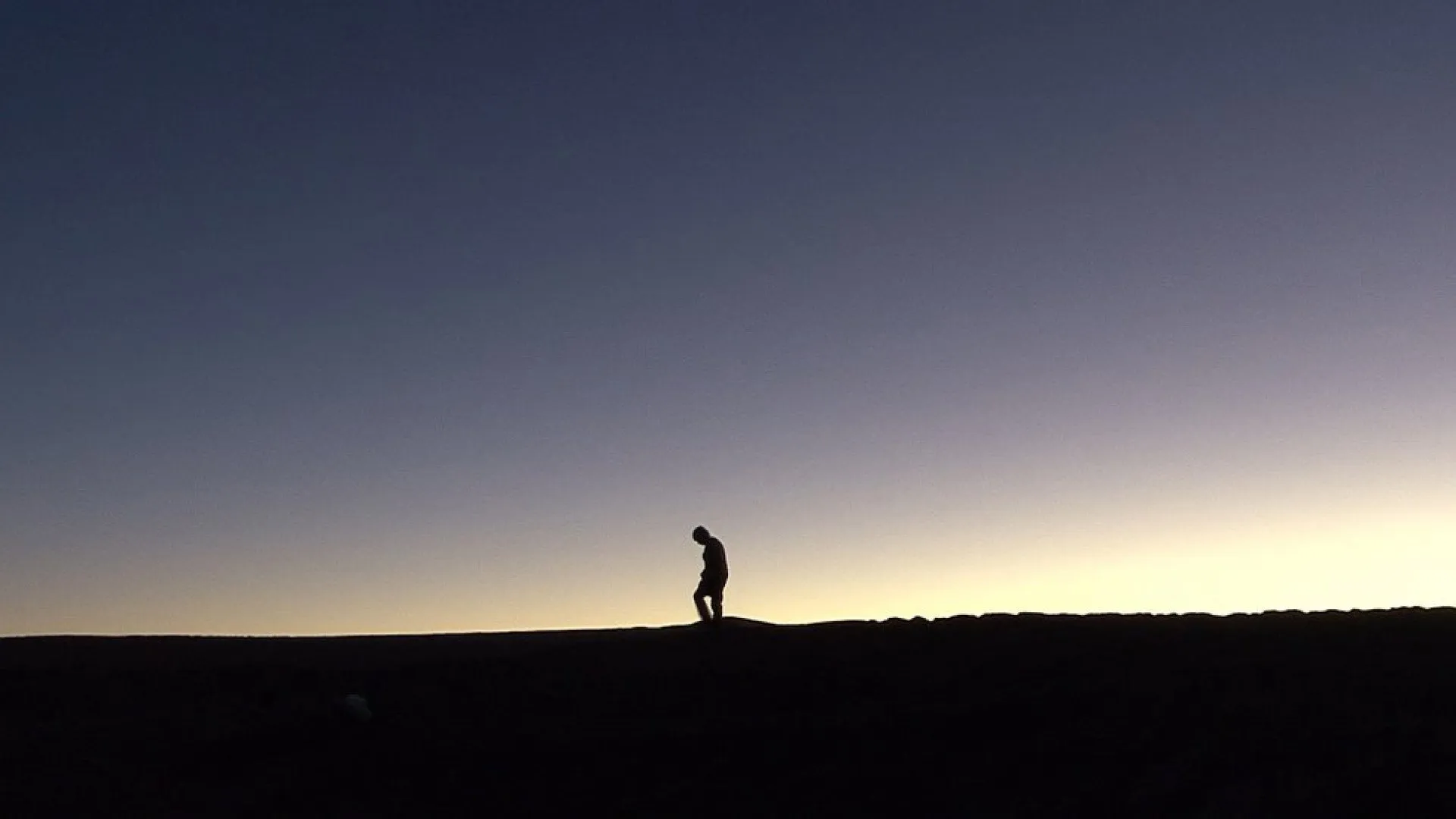
Nostalgia for the Light
2010 · 90 min · France, Germany, Chile
In the Atacama Desert, astronomers observe the far reaches of the universe while a group of women search the ground for the remains of their disappeared relatives. It premiered at Cannes on May 13, 2010, won the European Film Award for best documentary and opened in US theaters in March 2011.
Nostalgia for the Light (2010). The Atacama Desert at dusk.
Style and method
Guzmán shot The Battle of Chile in the direct cinema style: with Jorge Müller he favored long takes, a handheld camera and improvisation, and the film relied on an impersonal narrator who set out the facts. Over the years his cinema changed its voice. From Chile, Obstinate Memory and Salvador Allende on, the narrator was Guzmán himself, speaking in the first person from his own experience, and that voice became the signature of his later films.
He described his way of working in Filmar lo que no se ve (Filming What Cannot Be Seen), a book in which he distinguishes the auteur documentary from reportage. For him, a documentary begins with an “imaginary script,” a “way of freely imagining the work before making it,” and the final script is written only in the editing room. “A country without documentary films is like a family without photos,” he liked to say.
Last years
2022–2026His last released film was My Imaginary Country (2022), about the social uprising of October 2019 and the process of drafting a new constitution. It premiered at Cannes and reached Chilean theaters on Guzmán’s 81st birthday. On August 23, 2023, he received the National Prize for Performing and Audiovisual Arts: he was the second filmmaker to win it, after Raúl Ruiz. That same year he chose Chile’s Cineteca Nacional for the world premiere of the restorations of The First Year and The Battle of Chile, which Icarus Films then brought to North American theaters for the 50th anniversary of the coup.
His wife, Renate Sachse, was also the producer of his films and a close collaborator. When he died, Guzmán was working on a new feature with the producer Alexandra Galvis: he had shot part of it, was editing the footage in Paris and was preparing a trip to Chile for the interviews. He died in Paris on September 15, 2026, at the age of 85.
FIDOCS, juries and cinematheques
1997–2018In 1997 he founded the Santiago International Documentary Film Festival (FIDOCS), whose first edition opened on May 6 at the Goethe-Institut. He ran it until 2006 and was its president from 2007. In November 2026, two months after his death, the festival opened its 30th edition with a screening of Electro Show in his honor.
He served on the documentary juries of festivals in Bombay, Marseille, Guadalajara, Florence, Leipzig, Prague, Madrid, Paris, Venice and San Sebastián, as well as at FIPA. He combined filmmaking with teaching: in Chile he gave a documentary seminar every year, such as the one in September 2015 at the University of Chile’s Institute of Communication and Image.
He also made sure his films were preserved in Chile. In July 2013 he deposited 28 of them at the Cineteca Nacional, and in January 2014 he donated his films to the Cineteca of the University of Chile. In 2018 he worked with the Cineteca Nacional on a box set of his complete works, with a book for schools.
Books
Before turning to film, he published Cansancio de la tierra (1961), a book with two of his short stories, and the novella Juegos de verdad (1962). In 1977 the script and working method of The Battle of Chile appeared in Madrid, along with El cine contra el fascismo, a book-length interview with Pedro Sempere. He later published Filmar lo que no se ve (2013) and La batalla de Chile. Historia de una película (2020). His books, articles and interviews are gathered in Books and writings.
Awards and honors
- 2023National Prize for Performing and Audiovisual Arts, Chile
- 2016Scam Charles Brabant Prize for lifetime achievement, Paris
- 2015Humanity Award, São Paulo International Film Festival
- 2011Altazor Award for the Arts, Chile
- 2005Pablo Neruda Medal for Artistic Merit, Chile
- 1999Open Society Institute (Soros) fellowship, United States
- 1993John Simon Guggenheim Memorial Foundation fellowship
The awards for each film are listed on its page.
Legacy
The Battle of Chile is considered one of the greatest documentaries in the history of cinema: the American magazine Cineaste named it one of the ten best political films in the world, and in 2014 Sight & Sound included it, along with Nostalgia for the Light, among the greatest documentaries of all time. Even so, as Memoria Chilena notes, his films were shown very little in Chile. For more than five decades his cinema returned to dictatorship, exile, memory and impunity. His entire body of work, from the shorts of the 1960s to My Imaginary Country, can be explored in the filmography; the English Wikipedia article on him also gathers many references.
From the blog
- Patricio Guzmán’s Trilogy: Desert, Sea and Mountains
Nostalgia for the Light, The Pearl Button and The Cordillera of Dreams: what Patricio Guzmán’s trilogy is about, its awards and where to watch it in the US.