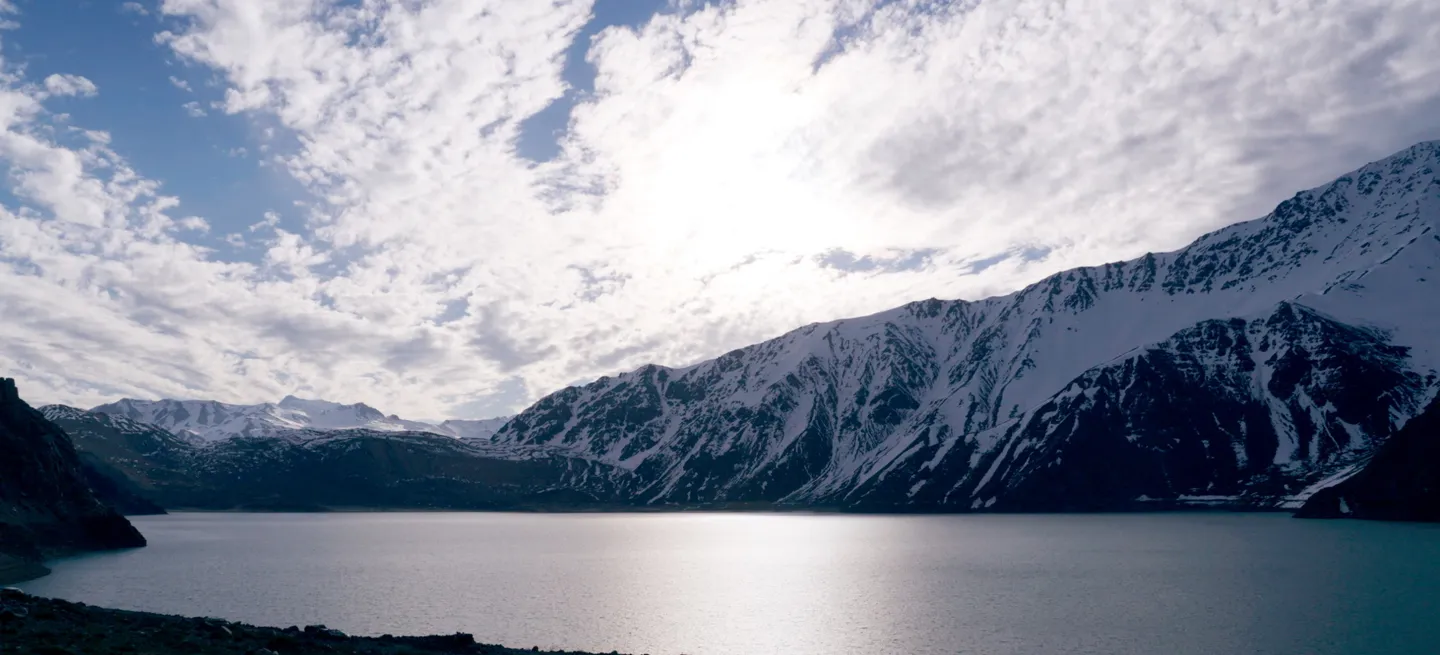
The Cordillera of Dreams (2019) is the documentary with which Patricio Guzmán closed his trilogy on the geography and memory of Chile: after the Atacama Desert in Nostalgia for the Light (2010) and the sea of Patagonia in The Pearl Button (2015), the Andes. It premiered in May 2019 in the Special Screenings of the Cannes Film Festival, where it won the Golden Eye (L’Œil d’or) for best documentary. It runs 84 minutes.
- 7.2IMDb · 1.1K votes
- 3.8Letterboxd · out of 5
- 6.8FilmAffinity · 346 votes
- 93 %Rotten Tomatoes · 30 reviews
Data as of November 23, 2026.
About the film
“In my youth I felt no curiosity about the Andes,” Guzmán says in the film. “My generation was too busy creating a new society.” Over the years the mountains began to intrigue him, as a doorway to understanding today’s Chile.
The cordillera covers some 80 percent of the country’s territory, yet most Chileans live with their backs to it. “I feel that Santiago turns its back on the cordillera,” says the volcanologist Álvaro Amigo. The singer Javiera Parra remembers that in her family people said the cordillera was like a mother: even if you couldn’t see her, you knew she was there.
Two sculptors help Guzmán look at it. Francisco Gazitúa, from his workshop in Pirque, describes it as “a chest where the most important poetic laws are kept.” For Vicente Gajardo, more than a physical place it is a cultural reference, something he cannot define because he breathes it. Guzmán also returns to his childhood, among the ruins of the house where he grew up.
The mountain witnessed the country’s recent history. The writer Jorge Baradit talks about the unease the dictatorship left behind.
And then there is Pablo Salas, a cameraman who stayed in Chile during the dictatorship and filmed in the streets day after day: protests, arrests, police abuse. His archive of videotapes is at the heart of the film. Salas explains that he did not care about convincing outsiders of the regime’s horrors, since they were already convinced, but the people inside the country.
The film ends with a wish. Guzmán recalls that his mother taught him to make one whenever he saw a shooting star, and he says his own aloud: “My wish is that Chile recovers its childhood and its joy.”
Making of
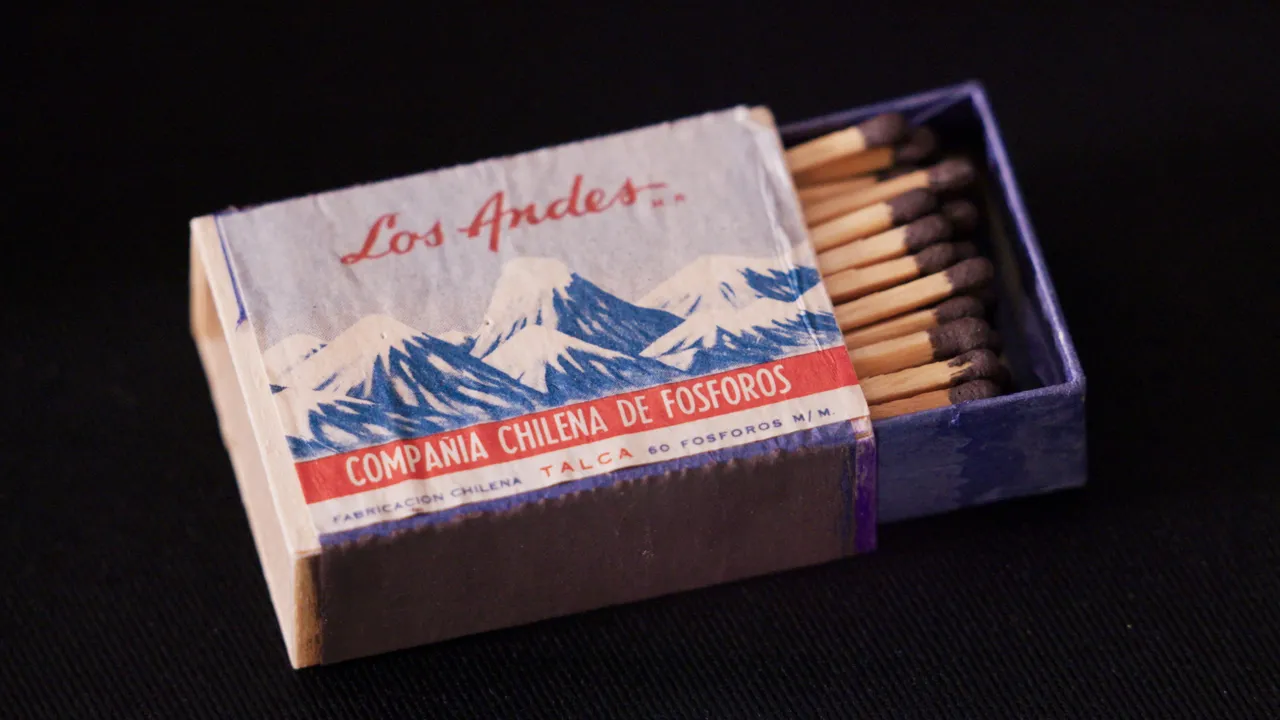
Guzmán said the film changed meaning before he shot it. In 2015 he took The Pearl Button to Fidocs in Santiago, ready to defend it against the criticism his films about the dictatorship usually drew, but the audience was more open than ever, and soon afterward the Ministry of Education asked him for several of his films to show in schools and universities. He felt the country was beginning to remember, and the mountain range became for him a metaphor for what does not change, for what remains even though part of history has disappeared.
Samuel Lahu shot the film, Emmanuelle Joly edited it and Álvaro Silva Wuth recorded the sound. Renate Sachse produced it for Atacama Productions, with ARTE France.
Reception
At Cannes it shared the Golden Eye with For Sama, by Waad al-Kateab and Edward Watts. According to the jury, both films “speak of love, exile, resistance and the joy of disobeying together.” Guzmán was not at the festival on the day of the ceremony, and one of the producers read his message.
In the United States, Icarus Films released it in February 2020. In The New York Times, Glenn Kenny called it “a beautiful film about nightmares that have yet to end”; in the Los Angeles Times, Justin Chang described “a nature film refracted through a historical trauma.”
In Chile it premiered online: on September 9, 2020, at the Festival de Cine UC, and on October 22, 2020, on streaming. In February 2022 it won the Goya Award for best Ibero-American film, the first documentary to win in that category. The producer Alexandra Galvis accepted the award; from Paris, Guzmán called it “a prospective film” that had somewhat foreseen what was going to happen in Chile.
In El País (December 17, 2021), Elsa Fernández-Santos found it more autobiographical than the two previous films, and also more pessimistic, and singled out Pablo Salas’s archive as “the best-kept secret behind the Andean wall.”
Awards
- 2019Cannes Film Festival — L’Œil d’or (Golden Eye) for best documentary
- 2022Goya Awards — Best Ibero-American Film
Sources
- CineChile
- Festival de Cannes
- La Tercera
- Patricio Guzmán, director’s notes, official website
- Pedro Bahamondes, La Tercera, May 26, 2019
- Glenn Kenny, The New York Times, February 11, 2020
- Justin Chang, Los Angeles Times, February 20, 2020
- Elsa Fernández-Santos, El País, December 17, 2021
- Radio Universidad de Chile, January 5, 2021
- Casa de América (Madrid), film page, 2022