Patricio Guzmán’s Trilogy: Nostalgia for the Light, The Pearl Button and The Cordillera of Dreams
Patricio Guzmán’s trilogy brings together three documentaries on the geography and memory of Chile: Nostalgia for the Light (2010), filmed in the Atacama Desert; The Pearl Button (2015), on the sea of Patagonia; and The Cordillera of Dreams (2019), in the Andes. In all three, the landscape is the way into the dictatorship and its disappeared. All three were released in American theaters, and today they can be streamed in the US on OVID or borrowed through public libraries. Guzmán died in Paris on September 15, 2026.
What the trilogy is
Guzmán made the three films over a decade, with almost the same crew. He narrated them in his own voice, Emmanuelle Joly edited all three, Katell Djian shot the first two, and all were produced by Atacama Productions in France.
Each film starts from one element of the Chilean landscape, the desert sky, water and the mountains, and ties it to the country’s recent history. They can be watched on their own. In order of release, they travel from the desert north to the far south and end in the range that runs the length of the country.
The set has no fixed title in English. Programmers and critics speak of a trilogy of landscape and memory; in Spanish-speaking countries, MUBI presents it as “Trilogía de la luz.” When Guzmán died, The New York Times recalled it as his second trilogy, about the legacy of the regime whose coup he had filmed in the first, according to its obituary.
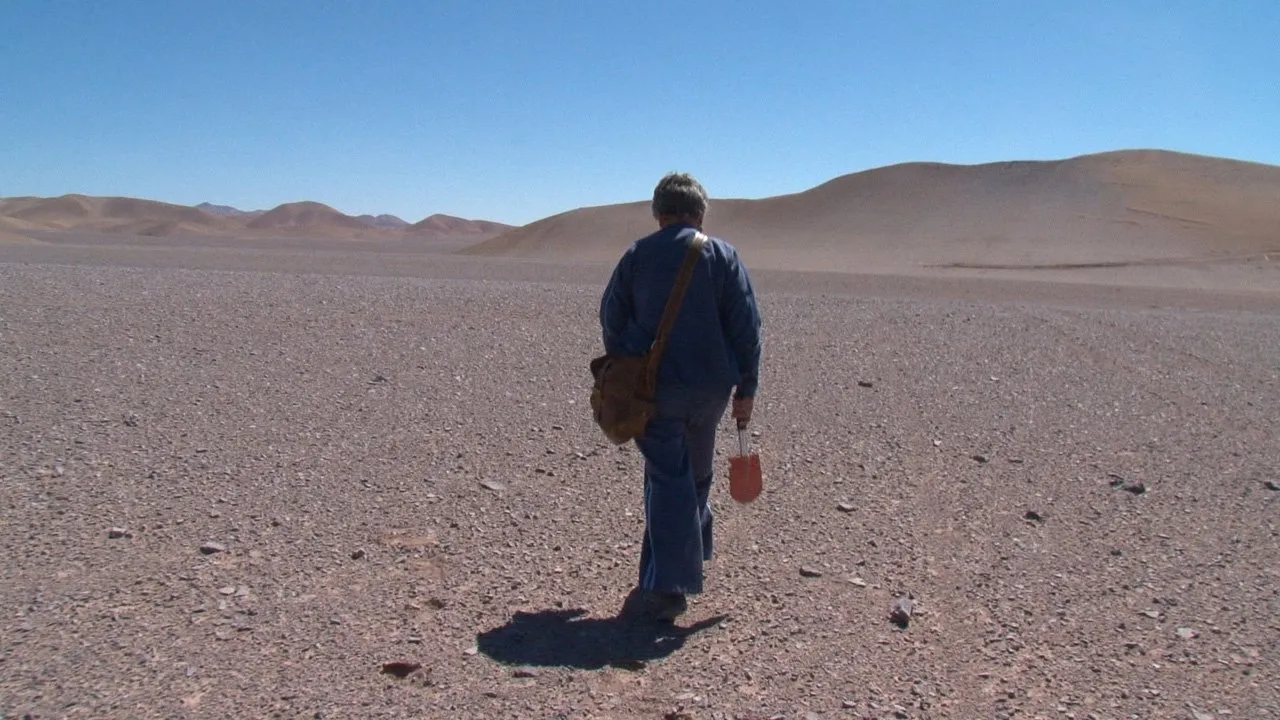
Nostalgia for the Light (2010)
In the Atacama Desert, the sky is so clear that astronomers from around the world come to observe the most distant galaxies, and the ground is so dry that it preserves human remains intact. Nostalgia for the Light sets these searches side by side: that of the astronomers, who study light arriving from the past, and that of women like Violeta Berríos and Vicky Saavedra, who for decades have combed the ground for the bones of relatives who disappeared under the dictatorship.
It premiered at the Cannes Film Festival on May 13, 2010, and that year won the European Film Award for best documentary. In Sight & Sound’s 2014 poll of the greatest documentaries, it tied for 12th place in the critics’ vote. In the United States, Icarus Films opened it in New York in March 2011, and in 2012 PBS broadcast it on POV.
The Pearl Button (2015)
The second film moves from the desert to water. Chile has one of the longest coastlines in the world, and in Patagonia peoples bound to the sea, such as the Kawésqar and the Yagán, lived for thousands of years; some of their last descendants speak in the film. The title of The Pearl Button joins two buttons: the pearl buttons for which a young Yagán, Jemmy Button, agreed to travel to England in the 19th century, and one found embedded in a length of rail recovered from the seabed, one of those the dictatorship used to sink the bodies of political prisoners in the ocean.
It premiered on February 8, 2015, in the official competition of the Berlinale, where it won the Silver Bear for Best Script. In 2016 it received the Lumière Award for best documentary in France and the Platino Award for best documentary. Kino Lorber opened it in New York in October 2015, and The New York Times made it a Critic’s Pick.
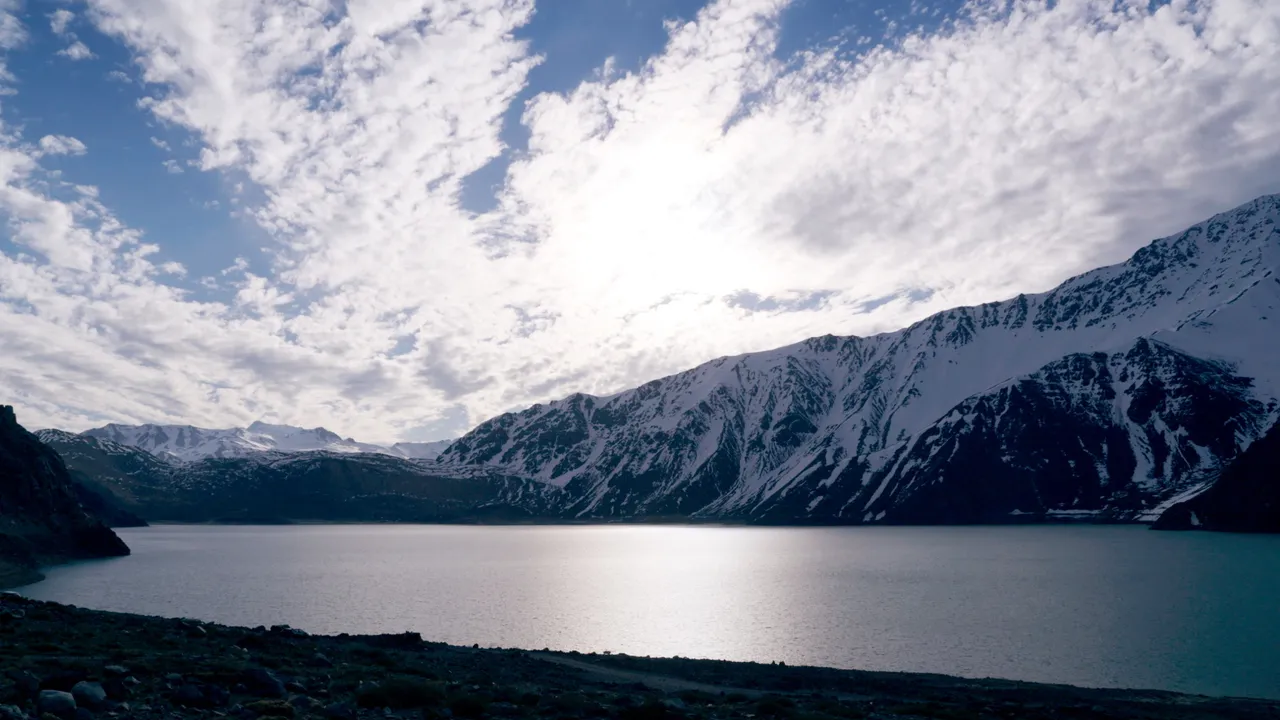
The Cordillera of Dreams (2019)
The trilogy ends in the Andes, which cover some 80 percent of Chile and to which much of the country turns its back. In The Cordillera of Dreams, Guzmán returns to the ruins of the house where he grew up and to recent history through the archive of Pablo Salas, a cameraman who stayed in Chile and filmed protests, arrests and police abuse under the dictatorship. In El País, Elsa Fernández-Santos found it more autobiographical than the two earlier films.
It premiered in May 2019 at the Cannes Film Festival, where it won the Golden Eye for best documentary. Icarus Films released it in the United States in February 2020. In February 2022 it won the Goya Award for best Ibero-American film, the first documentary to win in that category.
The other trilogy: The Battle of Chile
When people speak of Patricio Guzmán’s trilogy, they sometimes mean another work: The Battle of Chile, his three films on the Popular Unity government and the 1973 coup, The Insurrection of the Bourgeoisie (1975), The Coup d’État (1976) and Popular Power (1979). Those were shot in the streets as events unfolded; the later trilogy returns to that past decades afterward, through the landscape.
The first two parts opened at Film Forum in New York in January 1978. In 2023, for the 50th anniversary of the coup, a new restoration played at the Brooklyn Academy of Music and in other North American theaters, as The New York Times reported. All of Guzmán’s work is in the filmography.
Where to watch the trilogy in the US
Nostalgia for the Light, The Pearl Button and The Cordillera of Dreams are all on OVID, a streaming service for documentaries and independent films, which also carries the first two parts of The Battle of Chile. The Pearl Button is also on Kino Film Collection. With a library card, Nostalgia for the Light and The Pearl Button are on Kanopy, and all three films are on Hoopla. Catalogs change; this information was checked on November 27, 2026.
Frequently asked questions
- Which films make up Patricio Guzmán’s trilogy?
- The trilogy is made up of Nostalgia for the Light (2010), The Pearl Button (2015) and The Cordillera of Dreams (2019). Guzmán also divided The Battle of Chile (1975–1979), his documentary on the Popular Unity government and the coup, into three parts.
- In what order should you watch the trilogy?
- Each film can be watched on its own. In order of release, the journey goes from the Atacama Desert to the sea of Patagonia and ends in the Andes.
- Where can you watch the trilogy in the US?
- All three films are on OVID, The Pearl Button is also on Kino Film Collection, and with a library card they are on Kanopy and Hoopla. The first two parts of The Battle of Chile are on OVID. Information checked on November 27, 2026.
- What awards did the trilogy win?
- Nostalgia for the Light won the European Film Award for best documentary in 2010; The Pearl Button, the Silver Bear for Best Script at the Berlinale in 2015; The Cordillera of Dreams, the Golden Eye at Cannes in 2019 and the Goya for best Ibero-American film in 2022.
- What is the trilogy about?
- Chile’s geography, the desert, the sea and the mountains, as a way into the memory of the dictatorship and the disappeared.