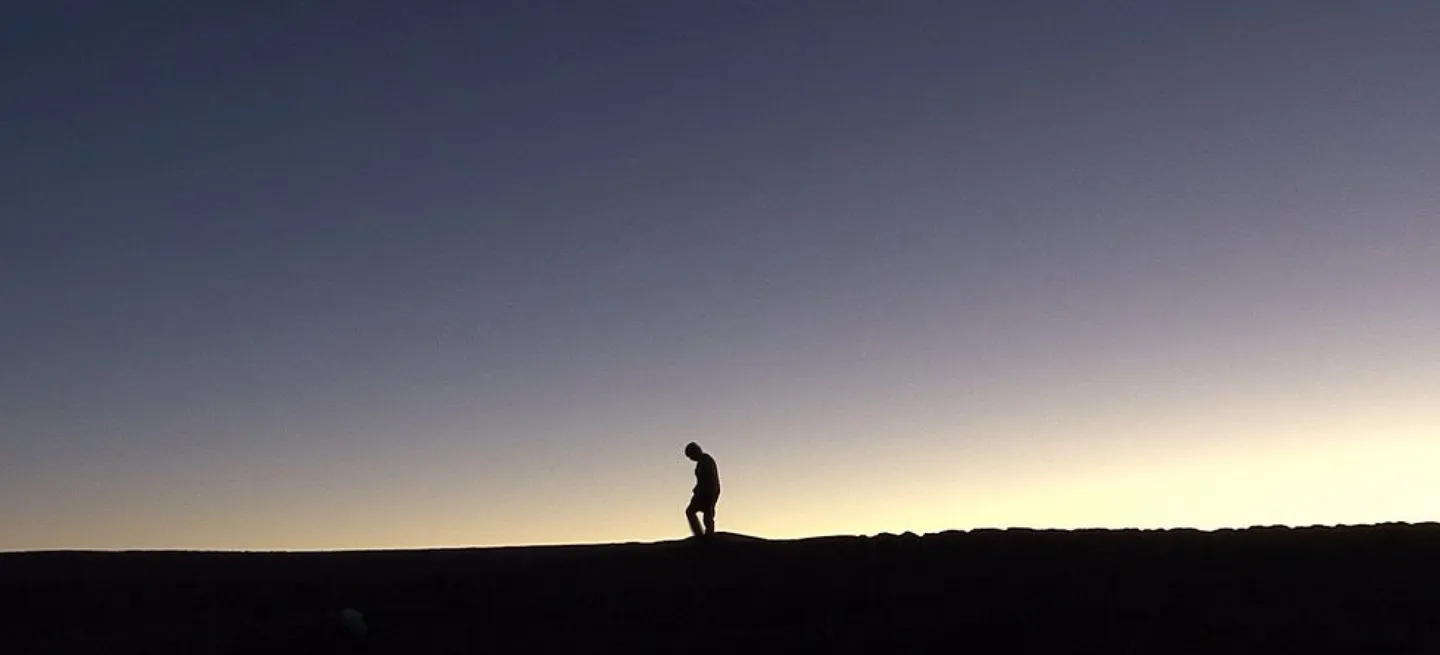
Nostalgia for the Light (2010) is Patricio Guzmán’s documentary about Chile’s Atacama Desert, where astronomers study the far reaches of the universe while a group of women search the ground for the remains of relatives who disappeared under the dictatorship. It premiered at the Cannes Film Festival on May 13, 2010, runs 90 minutes and opens the trilogy Guzmán completed with The Pearl Button (2015) and The Cordillera of Dreams (2019).
- 7.6IMDb · 6.7K votes
- 4.0Letterboxd · out of 5
- 7.5FilmAffinity · 1.9K votes
- 100 %Rotten Tomatoes · 48 reviews
Data as of November 23, 2026.
About the film
About 3,000 meters (10,000 feet) above sea level in northern Chile, the sky over the Atacama is so clear that astronomers from around the world come to observe the most distant galaxies. The same dryness keeps human remains intact: pre-Columbian mummies, 19th-century nitrate miners and the bodies of political prisoners of the dictatorship.
Guzmán, who narrates the film himself, places these searches side by side. The astronomer Gaspar Galaz explains that the light reaching us from the stars is always light from the past. The archaeologist Lautaro Núñez studies the traces of the desert’s ancient peoples. For decades, Violeta Berríos and Vicky Saavedra have combed the ground with makeshift tools, looking for the bones of their loved ones.
Other memories surface among them. Luis Henríquez was held at the Chacabuco camp, a former nitrate works turned into a prison after the coup, where the prisoners learned astronomy until the military banned it. Valentina Rodríguez, an astronomer, talks about her family, struck by the repression, and about what the sky has helped her understand.
Making of
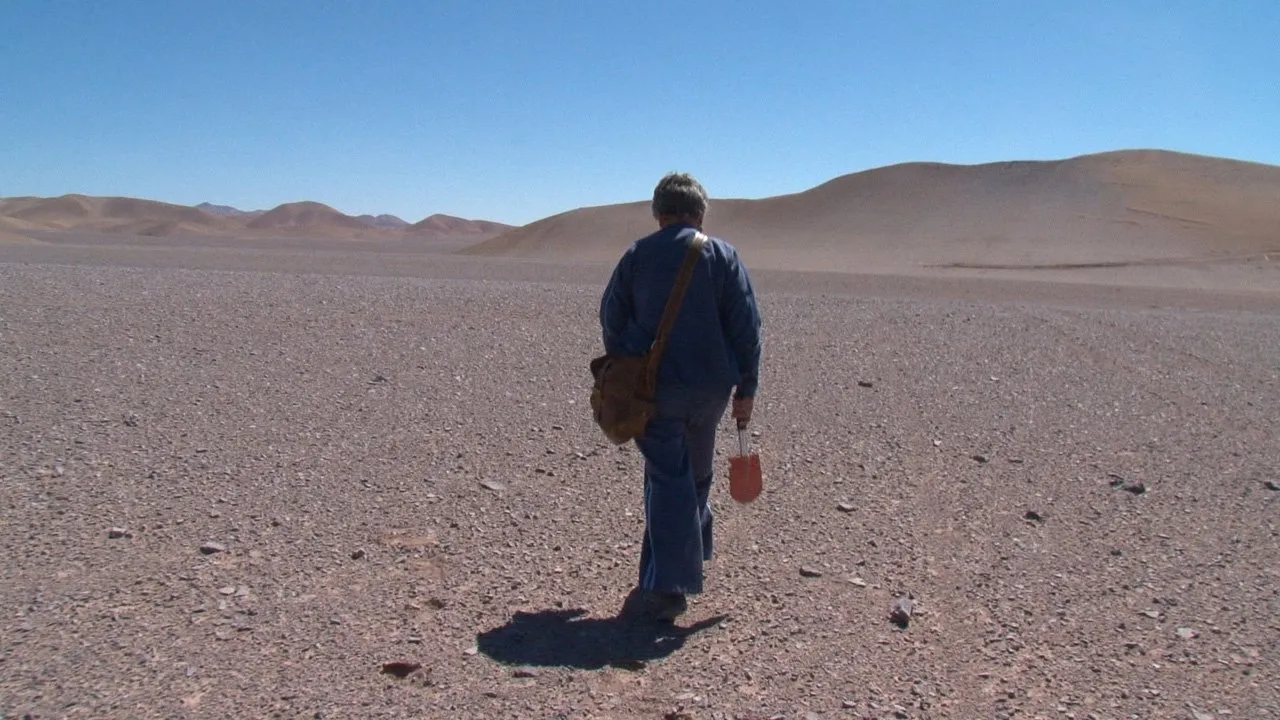
“I was always attracted to the Atacama desert, in the north of my country,” Guzmán wrote about the film’s origins. He saw it as “a great container of the past”: fossil mollusks, mummies, abandoned nitrate mines, Inca roads and dozens of telescopes pointed at the stars, and, in the same place, women searching for the bones of relatives murdered by Pinochet’s dictatorship.
In a 2011 interview with the International Documentary Association, Guzmán said he wrote a script before traveling and that one of his ideas came to him in Paris, looking at a book of photographs in which asteroids resembled human bones. In the Atacama, the astronomer George Preston told him that the calcium he was observing in a galaxy was the same calcium found in bones. Guzmán then thought of the women who, twenty kilometers (about twelve miles) from the observatory, were searching the desert for bones.
Katell Djian shot the film, Emmanuelle Joly edited it with Guzmán, and the music is by José Miguel Miranda and José Miguel Tobar. It was produced by Atacama Productions (France), Blinker Filmproduktion with WDR (Germany) and Cronomedia (Chile).
Reception
After Cannes, the film received a special mention for the François Chalais Prize and, the same year, the European Film Award for best documentary. In 2011 its awards included Best Feature at the International Documentary Association’s IDA Documentary Awards and three Pedro Sienna Awards in Chile, among them best director.
In Le Monde (October 26, 2010), Jacques Mandelbaum called it “a masterpiece of cosmic serenity.” In Sight & Sound’s 2014 poll of the greatest documentaries, it tied for 12th place in the critics’ vote; in the 2022 poll of the greatest films of all time, it tied for 243rd.
In the United States, Icarus Films opened it on March 18, 2011, at the IFC Center in New York, shortly before BAMcinématek’s retrospective of Guzmán’s documentaries. In The New York Times, Stephen Holden called it a “transfixing cinematic essay”; in the Los Angeles Times, Kenneth Turan wrote of “a film of rare visual poetry that’s simultaneously personal, political and philosophical.” In 2012 PBS broadcast it in the 25th season of POV.
In Chile it was first shown at the Fidocs festival in 2010 and reached theaters on September 8, 2011. In July 2013, the public broadcaster Televisión Nacional aired it incomplete, without its opening. In an open letter, Guzmán denounced an “unacceptable act of sabotage”; the network blamed a technical error, apologized and announced a new, complete broadcast.
Awards
- 2010Cannes Film Festival — François Chalais Prize, special mention
- 2010Biarritz Latin America Film Festival — Audience Award, documentary
- 2010Abu Dhabi Film Festival — Best Documentary
- 2010European Film Awards — Best Documentary
- 2011Guadalajara International Film Festival — Best Documentary
- 2011San Sebastián Human Rights Film Festival — Amnesty International Award
- 2011Pedro Sienna Awards — Best Feature Documentary
- 2011Pedro Sienna Awards — Best Director
- 2011Pedro Sienna Awards — Best Cinematography (Katell Djian)
- 2011Cinema Tropical Awards — Best Documentary
- 2011Chilean Art Critics’ Circle — Best Chilean Documentary
- 2011IDA Documentary Awards — Best Feature
Sources
- CineChile
- Festival de Cannes
- Patricio Guzmán, official website
- Jacques Mandelbaum, Le Monde, October 26, 2010 (English translation in the Icarus Films press kit)
- KJ Relth, interview with Patricio Guzmán, International Documentary Association, 2011
- Stephen Holden, The New York Times, March 17, 2011
- Kenneth Turan, Los Angeles Times, April 22, 2011
- POV, PBS, 25th season (2012)
- Sight & Sound (BFI): 2014 and 2022 polls
- Patricio Guzmán’s open letter to TVN, CIPER, August 1, 2013
- Pablo Retamal N., La Tercera, September 15, 2026