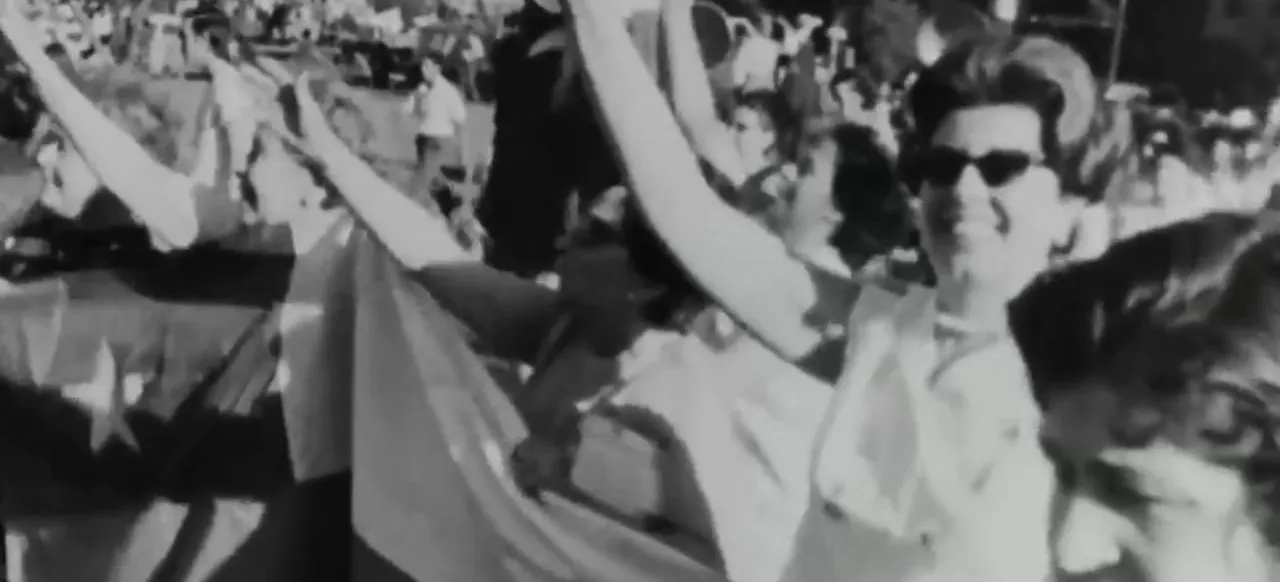
The First Year (1972) is Patricio Guzmán’s first feature-length documentary: a chronological account of the first year of Salvador Allende’s Popular Unity government. It was shot in black and white with a crew from the Catholic University, opened in Chile on July 31, 1972, and runs 100 minutes.
- 3.7Letterboxd · out of 5
Data as of November 23, 2026.
About the film
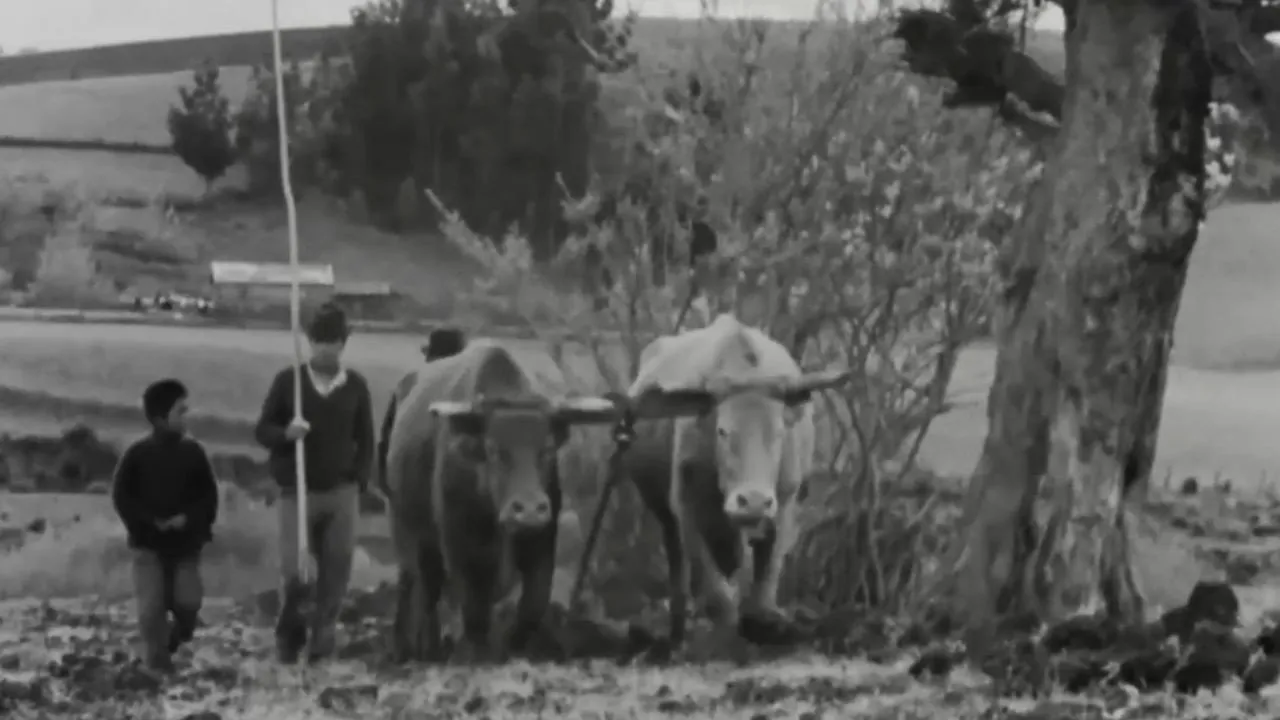
The film follows events month by month from Allende’s rise to power. In the south, Mapuche communities take back land from which they had been driven. On January 1, 1971, the coal mines are nationalized, and the miners explain what it means to them. Fishermen, peasants and workers speak, and that year’s municipal elections are experienced as a referendum on the government.
At the Yarur textile mill, nationalized in 1971, the workers recall that they had to bow before the owner’s statue; in one image, a worker climbs onto that statue. Then come the nationalization of nitrate and copper and the first agrarian reform centers.
Fidel Castro’s visit to Chile takes up much of the ending. Castro tells the camera: “I wish a film could be made of all this and sent to Nixon!” The march of the empty pots also appears, in which thousands of well-to-do women protested against the government. The film stops there, without predicting what would come next.
Making of
It was produced by the School of Communication Arts of the Catholic University. Antonio Ríos shot the film and Carlos Piaggio edited it. Jorge Müller, who would later be the cameraman of The Battle of Chile, filmed some scenes, among them those at the Yarur factory.
In France the film was championed by Chris Marker. His production company, SLON, made the French version and added a prologue on the history of Chile; actors such as François Périer and Delphine Seyrig voiced the Chileans who speak in the film. Marker, who had seen it, soon afterward sent Guzmán’s crew the film stock on which The Battle of Chile was shot.
Reception
It won the award of the Chilean Art Critics’ Circle in 1972 and the FIPRESCI prize at the Mannheim festival in 1973.
Not everyone liked it. In an October 1972 review, now reproduced by CineChile, Héctor Soto called it an “arbitrary, tiresome compilation” and faulted it for not explaining the political process it showed.
A restored version had its world premiere at Chile’s Cineteca Nacional in 2023. In September of that year Icarus Films brought it to theaters in New York, and The New York Times made it a Critic’s Pick.
Awards
- 1972Chilean Art Critics’ Circle — Art Critics’ Circle Award
- 1973Mannheim Film Festival — FIPRESCI Prize
Sources
- CineChile
- Patricio Guzmán, official website
- Escuela de Cine UDP
- Texts attributed to Chris Marker (1972), Patricio Guzmán’s official website
- Héctor Soto Gandarillas, October 1, 1972, CineChile press archive
- Cineteca de la Universidad de Chile, “Patricio Guzmán en archivo,” August 2023
- Devika Girish, The New York Times, September 7, 2023
- Hammer to Nail, interview with Patricio Guzmán, 2023