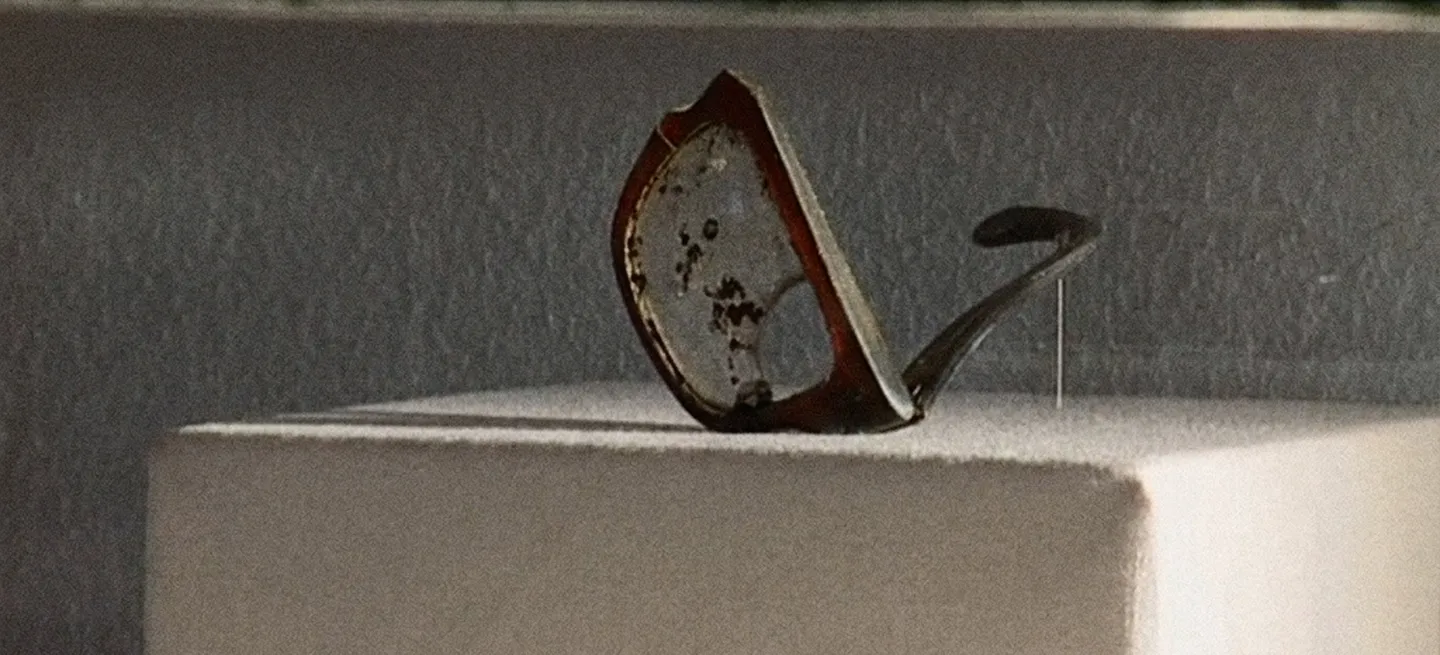
Salvador Allende (2004) is Patricio Guzmán’s documentary about the Chilean president, from his childhood in Valparaíso to his death during the coup of September 11, 1973. Guzmán narrates it in the first person and combines archive footage, family photographs and interviews with people who knew Allende. It premiered in May 2004 in the official selection of the Cannes Film Festival, out of competition, and runs 100 minutes.
- 7.5IMDb · 816 votes
- 3.7Letterboxd · out of 5
- 7.4FilmAffinity · 1.3K votes
- 85 %Rotten Tomatoes · 13 reviews
Data as of November 23, 2026.
About the film
The film opens in front of a white wall in Santiago. Guzmán scrapes it with a stone, as if looking for what was left underneath, and from there he returns to Allende’s story and to his own: that of a young filmmaker who lived through the Popular Unity government with a camera in his hand.
Allende was a doctor, one of the founders of the Socialist Party, a congressman and senator, and he crossed Chile from north to south countless times. He lost the presidential elections of 1952, 1958 and 1964, and won in 1970.
His friends and colleagues speak, as do his daughters and other relatives, Popular Unity activists, workers, journalists and his personal secretary. So does Edward Korry, the US ambassador to Chile at the time, who describes from the inside Richard Nixon and Henry Kissinger’s decision to block Allende’s government.
Guzmán works with the archive he himself filmed in the 1970s and with some footage by the Dutch filmmaker Joris Ivens. The film reconstructs the attack on La Moneda and Allende’s last radio address, and ends with a poem by Gonzalo Millán whose last word is “Venceremos” (“We shall overcome”).
Making of
Guzmán filmed mostly in Santiago, between April 21 and June 6, 2003. Julia Muñoz and Guzmán himself shot the film, Claudio Martínez edited it and Jorge Arriagada wrote the music; Renate Sachse was the artistic adviser. It was produced by Jacques Bidou’s JBA Productions, with partners from several countries, including the Spanish company Mediapro.
“Making this film, I wanted to remember the radiant dream my generation lived, when politics and utopia were synonyms,” Guzmán wrote. He also warned that it was not an encyclopedia: Allende was a party leader, minister, congressman and senator for 43 years, and much of that is left out. In his words, the film gathers “only a few fleeting moments of emotion.”
At Cannes he told El País that he wrote very detailed scripts, but that everything changed during the shoot: “They are like jazz: we know what we are playing, but we let ourselves go, we improvise.” And he admitted he was still in love with that period: “I still haven’t managed to let go of Allende.”
Reception
In El País (May 14, 2004), Ángel Fernández-Santos called it “a document of extraordinary evocative power” and wrote that the film is “moving, elegant, powerful.” In France about 120,000 people saw it between September 2004 and January 2005; in Chile it reached theaters on September 1, 2005, and drew around 50,000.
It won the Grand Prize of the Lima Film Festival in 2004, the audience award at the Salzburg festival in 2005 and the Altazor Award in Chile in 2006. In Spain it was nominated for the Goya Award for best documentary in 2005. When it opened in New York in September 2007, The New York Times described it as a “plaintive look back at the rise and violent fall” of Allende’s government.
Awards
- 2004Lima Film Festival — Grand Prize
- 2005Salzburg Film Festival — Audience Award
- 2005Goya Awards — Best Documentary Film (nomination)
- 2006Altazor Awards — Altazor Award
Sources
- CineChile
- Festival de Cannes
- El País
- Patricio Guzmán, director’s notes, official website
- Miguel Mora, interview with Patricio Guzmán, El País, May 16, 2004
- Film page, Memoria Chilena, National Library of Chile
- Icarus Films, distribution page
- Juan E. Murillo, laFuga
- Libération, May 13, 2004 (translation on the official website)
- Goya Awards, 19th edition (2005)
- The New York Times, September 5, 2007