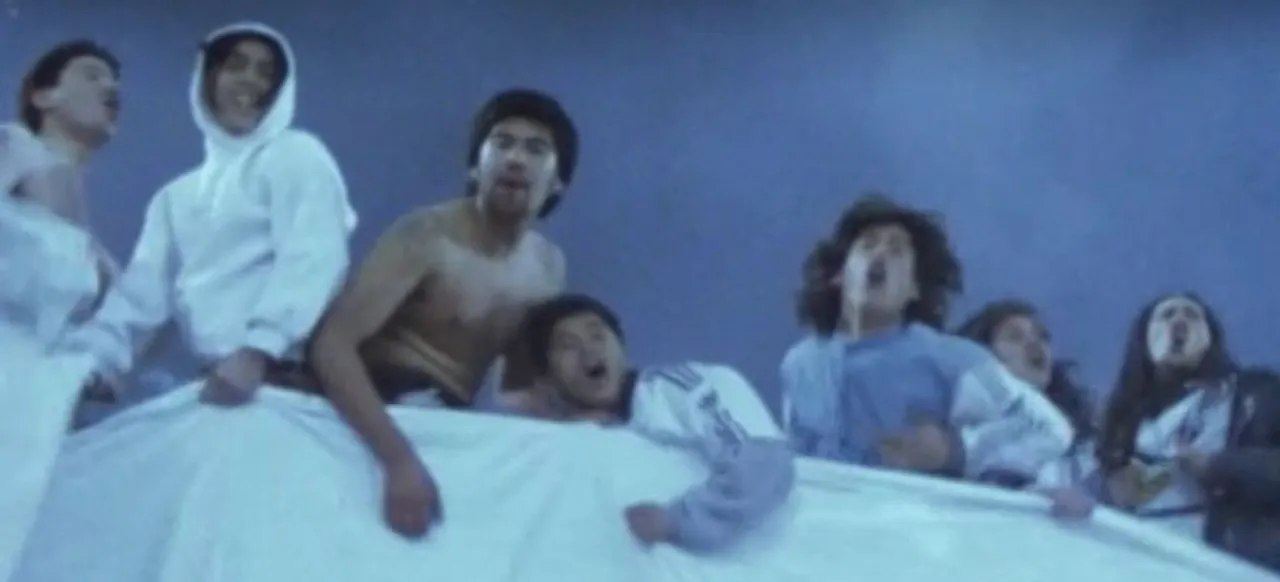
Chile, Obstinate Memory (1997) is the documentary in which Patricio Guzmán returns to Santiago with The Battle of Chile under his arm, more than twenty years after the coup. He looks for the people who appeared in that film and shows it to young people who did not live through Popular Unity. It premiered in 1997 at the Marseille festival, where it won the audience award, and runs 58 minutes.
- 7.8IMDb · 411 votes
- 3.8Letterboxd · out of 5
- 7.4FilmAffinity · 234 votes
Data as of November 23, 2026.
About the film
One of the first people to appear is Ignacio, the director’s uncle. After the coup he kept the reels of The Battle of Chile in his house and helped get them out of the country through the Swedish embassy. Now 80, he tries to play the “Moonlight” Sonata on the piano, the piece that accompanies the memory of the disappeared in the film. He makes a mistake and starts again.
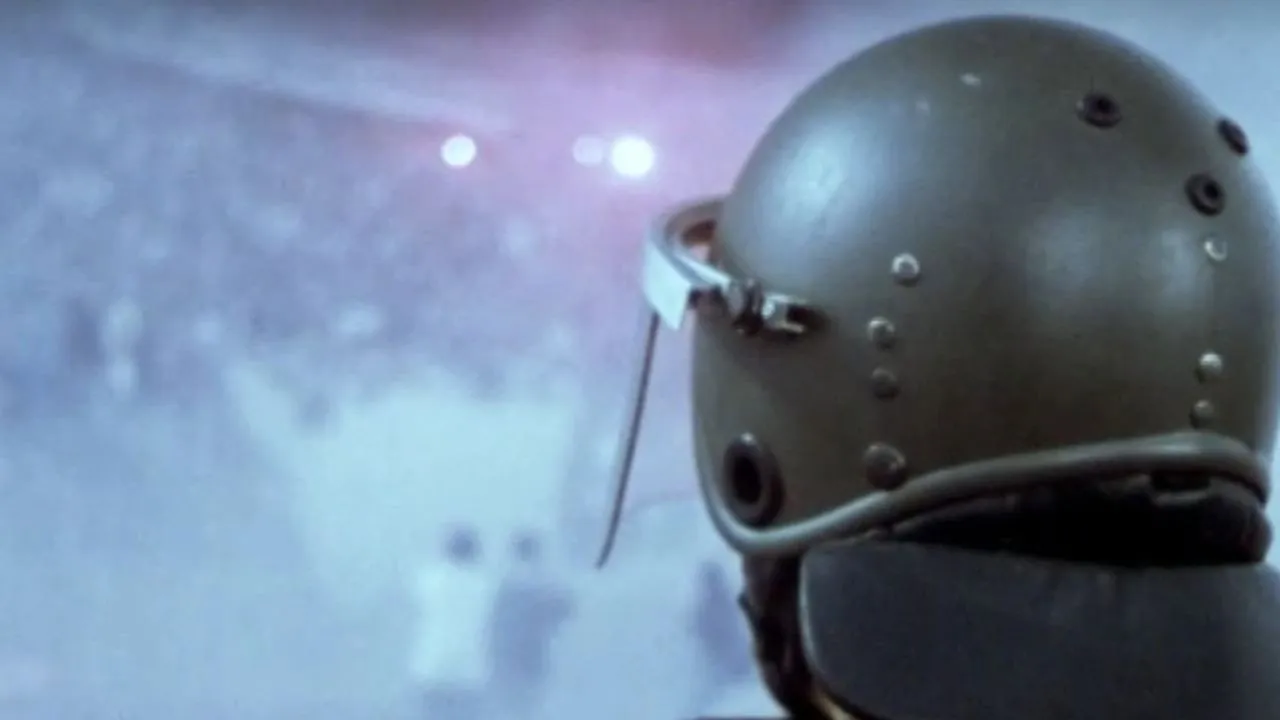
A band marches through downtown Santiago playing “Venceremos,” the Popular Unity anthem, and Guzmán films the reactions of passersby. In an old auto repair shop he finds Allende’s bodyguards, who speak publicly for the first time. He also returns to places he filmed in the 1970s, such as the National Stadium, turned after the coup into a detention and torture center.
The last part takes place in classrooms. Guzmán screens The Battle of Chile at four schools and two universities and films the students afterward. Many knew very little about those years, and they are overwhelmed by emotion. The painter José Balmes closes the film: “Memory and forgetting make us suffer and die, but they also make us live.”
Making of
The idea came up in 1995, at the Marseille festival. The producer Yves Jeanneau suggested that Guzmán film his return to Chile as an autobiographical documentary. “I’ll propose something similar,” the filmmaker replied: “instead of filming my trip, I’d like to film the search for the old characters who appear in The Battle of Chile.” Three months later he traveled to Santiago with his assistant, Álvaro Silva, to look for locations and people.
It was produced by Les Films d’Ici, in France, and the National Film Board of Canada (NFB) for the ARTE channel. It was shot on Super 16mm, with cinematography by Eric Pittard, editing by Hélène Girard and sound by Boris Herrera; Renate Sachse was the artistic adviser.
Guzmán asked about forty schools for permission to screen The Battle of Chile, and only four agreed. “The others told me the kids could be traumatized, that the past should be forgotten,” he recalled.
Reception
After Marseille, the film won the Grand Prize of the Festival dei Popoli in Florence in 1997 and the second documentary prize at the Havana festival. In 1998 it received two awards at Hot Docs, in Canada, four at the Yorkton festival, including the Grand Prize, and the Golden Spire at the San Francisco festival. In Chile it reached theaters on October 6, 2000.
In New York it opened at Film Forum in September 1998, together with the second part of The Battle of Chile. The New Yorker found it “pure in focus and vigorous in attack,” a documentary that “achieves poetic intensity.”
In Le Monde (1998), Catherine Humblot singled out the ending, “an intense and terrible sequence: the shaken, moved faces of young people unable to master the emotion that rises in them as they contemplate their own history.”
Awards
- 1997Marseille International Documentary Film Festival — Audience Award
- 1997Festival dei Popoli, Florence — Grand Prize
- 1997Havana Film Festival — Second Documentary Prize
- 1998San Francisco International Film Festival — Golden Spire
- 1998Hot Docs, Canada — Best Political Documentary
- 1998Hot Docs, Canada — Best Canadian Documentary
- 1998Yorkton Film Festival, Canada — Grand Prize
- 1998Yorkton Film Festival, Canada — Best Historical Documentary
- 1998Yorkton Film Festival, Canada — Best Director
- 1998Yorkton Film Festival, Canada — Best Editing
- 1998Saint Louis International Film Festival, USA — Best Documentary
- 1998Columbus International Film & Video Festival, USA — Special Mention
- 1998Shanghai TV Festival — Special Mention
- 1999DocAviv, Tel Aviv — Grand Prize
- 1999Leipzig Documentary Film Festival — Second Prize
Sources
- CineChile
- Casa de América
- Revista Alpha (SciELO)
- Patricio Guzmán, director’s notes, official website
- Jaume Peris Blanes, “Los tiempos de la violencia en Chile: La memoria obstinada de Patricio Guzmán,” Alpha, 2009
- Catherine Humblot, Le Monde, 1998 (translation on the official website)
- Stuart Klawans, The Village Voice, 1998
- The New York Times, September 6, 1998; New York Daily News, September 9, 1998
- The New Yorker, September 14, 1998